What Selling a Patek Philippe Taught Me About Trust
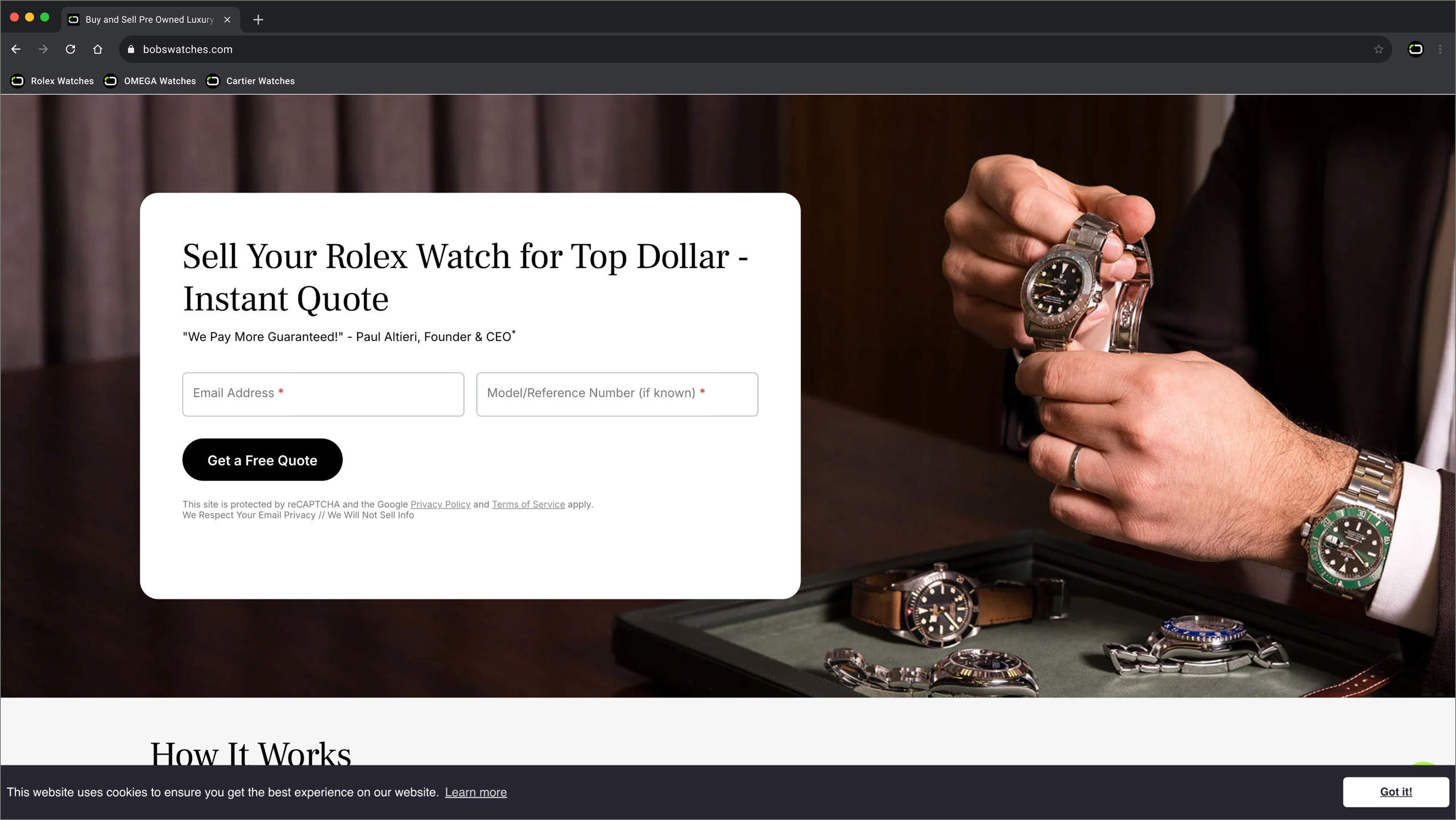
In e-commerce, we tend to believe our job is to guide users toward a form and get them to click "Submit". We optimize field order, debate button colors, and argue over conversion rates tied to that final interaction. But after analyzing hundreds of real user sessions from people selling luxury watches at Bob’s Watches, I learned something uncomfortable:
For high-value sellers, the submit button is not the start of the journey. It is the definitive end.
When someone considers selling an Patek Philippe, or a Audemars Piguet online, they are not “converting” in the traditional sense. They are evaluating whether they can trust a digital system with a physical asset worth tens of thousands of dollars.
This project emerged entirely from behavioral data. There was no usability testing, no interviews, no surveys. Just Microsoft Clarity session recordings, heatmaps, rage clicks, and scroll depth, observed continuously over time. What those users revealed challenged almost every assumption I had about forms, funnels, and where “conversion” actually happens.
Designing Inside a Low UX Maturity Environment
Bob’s Watches operates in an environment where UX maturity is low and SEO priorities dominate decision-making. There is no formal research program, limited UX buy-in, and a strong reliance on legacy patterns that exist primarily to preserve search performance.
Large redesigns were off the table. Navigation, information architecture, and page structure were non-negotiable, largely because they were considered “SEO-safe.”
The scope was narrow and deliberate:
- The Luxury Watch Pricing Table
- The Sell My Watch form
- The photo upload interaction
Nothing else.
Rather than fighting those constraints, the work focused on improving clarity, feedback, and trust within an SEO-first framework. The goal wasn’t to disrupt structure, but to make the existing surface work harder for users without risking search visibility.
Over time, as part of a continuous UX discovery practice, I documented issues daily, tagged them by behavioral pattern, and revisited the same journeys through different lenses. Individually, many issues appeared minor. Collectively, they told a very clear story.
The Form Is Not the Starting Line, It’s the Finish Line
The most counterintuitive insight from this research was also the most consistent:
Users are not “form-first sellers.” They are valuation-first sellers.

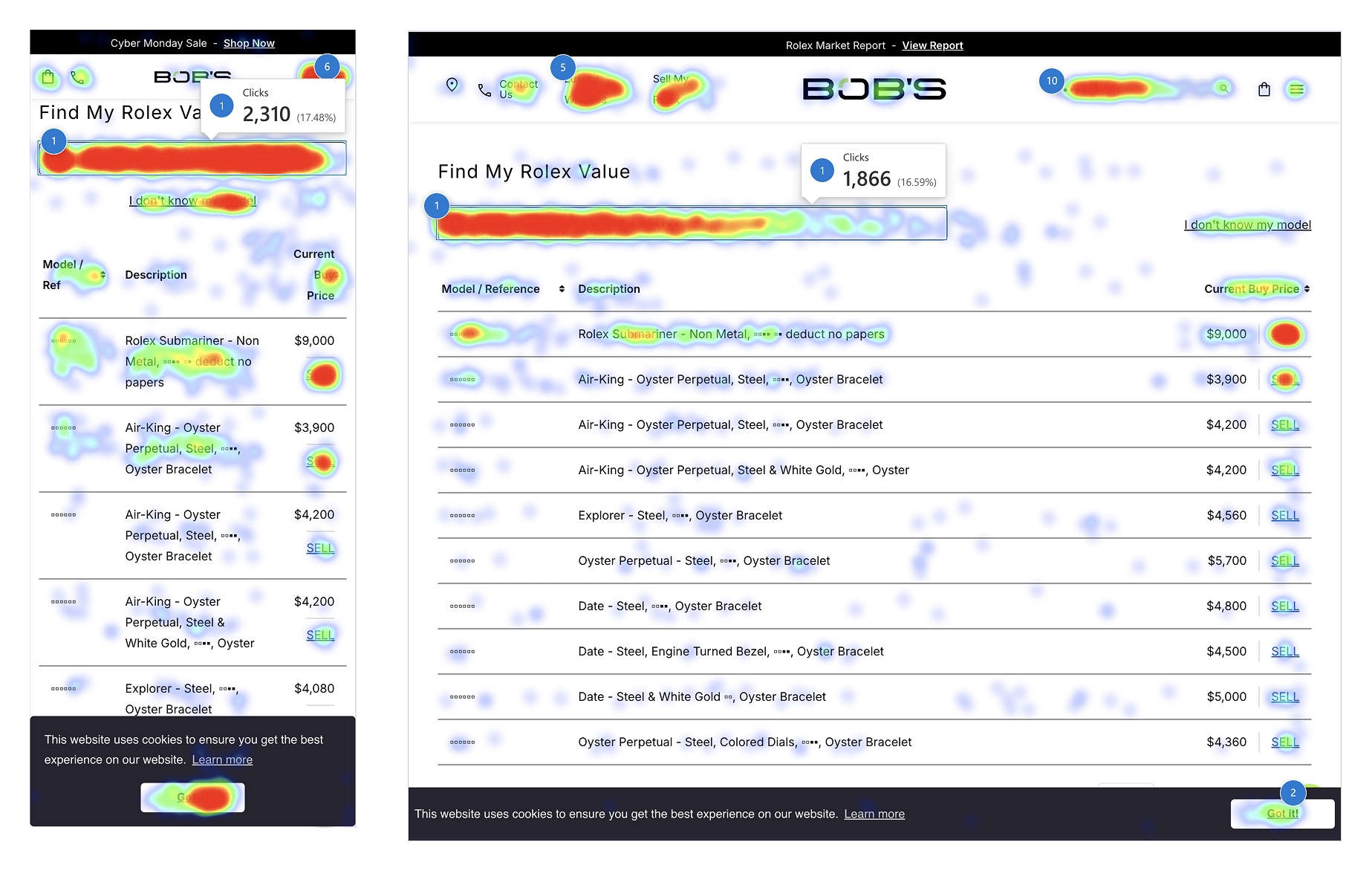
Across brands and devices, the pricing table search was almost always the first interaction. Users arrived with a single, non-negotiable question:
“What is my watch worth?”
Only after that question was answered did the form become relevant. The pricing table was not a supporting feature, it was the handshake. The form was simply the paperwork that followed trust. This mirrors behavior in other high-value digital transactions. Zillow shows you a Zestimate before asking for contact information. Carvana and Vroom lead with appraisal, not forms. In every case, value is demonstrated before commitment is requested.
High-value sellers were not trying to submit a form. They were trying to confirm what their watch was worth.
Luxury Sellers Do Not Behave the Same Way
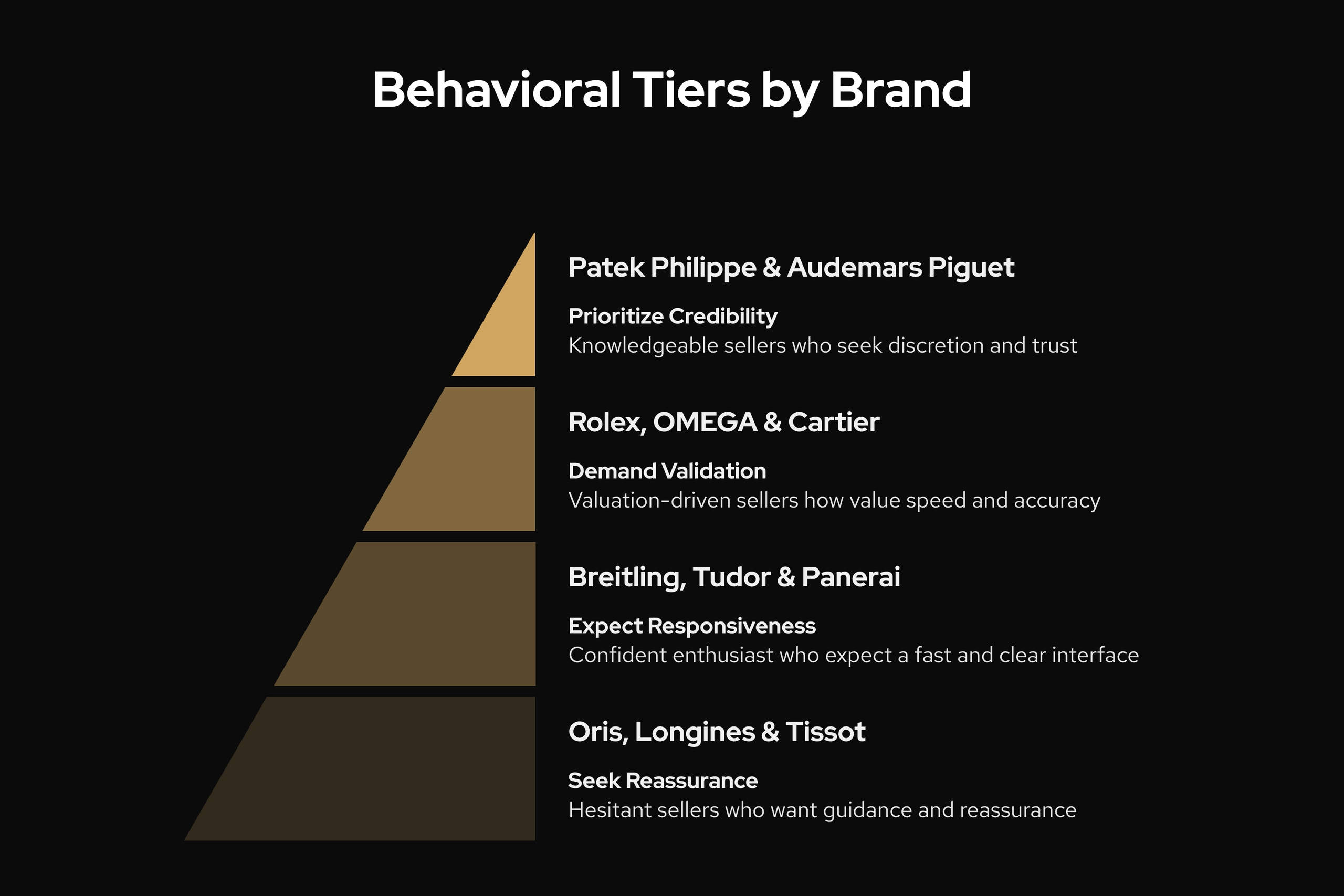
As patterns emerged, it became clear that seller behavior are clustered by brand, not demographics. The same interface produced very different expectations depending on the asset being sold.
Patek Philippe and Audemars Piguet
These sellers already knew their watch was valuable. Their behavior pointed to a different question entirely:
“Is this the right partner to handle something this important?”
They interacted with the form earlier, expected discretion, and had little tolerance for anything that felt automated or imprecise. The UX challenge here wasn’t persuasion. It was credibility at every touchpoint.
Rolex, Omega, and Cartier
These sellers were valuation-driven. They relied heavily on the pricing table and expected fast, data-backed confirmation. For them, the pricing table was the experience. Speed and validation mattered more than persuasion. Any delay or ambiguity weakened confidence.
Breitling, Tudor, and Panerai
These sellers were confident enthusiasts. They knew what they owned and expected the interface to keep pace. Dead clicks and unclear feedback frustrated them quickly. Trust rose or fell on responsiveness, not explanation.
Oris, Longines, and Tissot
These sellers often hesitated. Their sessions showed curiosity mixed with uncertainty. They weren’t optimizing for price. They were looking for reassurance. What mattered most was feeling guided, not pressured.

If It’s Not Immediately Visible, It Barely Exists
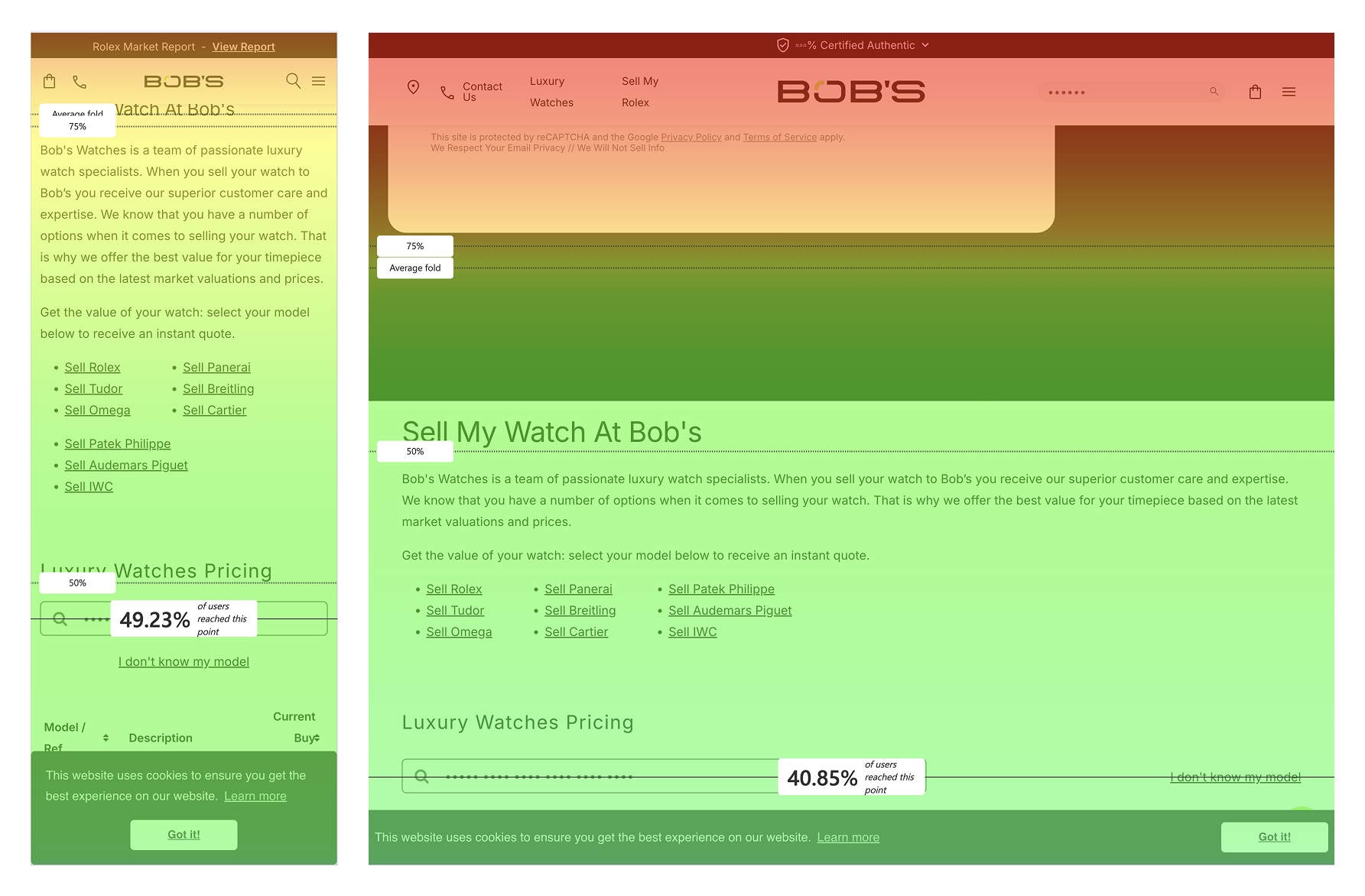
Scroll depth across sell pages was shallow. For high-value sellers especially, engagement dropped sharply after the first viewport. In many sessions, users never scrolled beyond 10–25% of the page.
This wasn’t laziness. It was decisiveness.
These users weren’t browsing. They were qualifying the experience. If the pricing table, primary call to action, or trust signals were not visible immediately, the session effectively ended. That behavior created a clear design mandate:
If it matters, it must be visible without scrolling.

Dead Clicks Are Not Mistakes. They’re Expectations
One of the most revealing behavioral signals came from rage and dead clicks. Users repeatedly clicked on:
- Static model names in the pricing table
- Disabled or broken pagination arrows
- Brand logos in “Featured On” sections
- Form fields they had already filled out

These were not random errors. They were expressions of expectation. In a luxury context, users assume polish. They assume responsiveness. Any element that looks interactive but does nothing quietly erodes trust.
In luxury UX, interactivity is part of the product.
When a Calatrava appears in a table, users expect it to be clickable. When they see a media logo, they expect validation. Each dead click is a small withdrawal from the trust bank. Their first judgment isn’t on price. It’s on whether you can price.
What the Research Was Really Listening For
This project didn’t rely on interviews or formal usability testing. It relied on patience, repetition, and close observation of behavior over time. The signals were already present. They showed up in scroll depth, hesitation, repeated clicks, and abandoned sessions.
Every click is a signal, every pause is a question, and every exit is an answer. UX work is about finding where uncertainty lives and designing feedback at that moment.
Users often don’t know their exact watch model and rely on collection pages to identify it before committing to the Sell flow.
The session above began on the Sell My Watch page, but the user left quickly, signaling uncertainty. They searched for “Tudor,” refined it to “Tudor Royal,” and used collection pages to identify their watch before returning to the Sell flow. This reflects a common pattern: users often need orientation before they can act with confidence.
These behaviors weren’t random. They consistently pointed to hesitation, expectation, and lost confidence. Instead of asking users what they wanted, the work focused on what their actions already revealed. Good UX work isn’t about polishing buttons in isolation.
From Insight to Design Decisions
The research didn’t point to a single feature change. It pointed to a shift in priorities. If sellers were evaluating competence before price, then the experience needed to demonstrate understanding before asking for commitment.
That reframed every design decision that followed, not around conversion mechanics, but around trust signals, feedback, and intent. What follows are the design principles that emerged directly from that behavioral evidence, and how they materialized in the interface.
Making Valuation the First-Class Experience
Once the research made one thing clear, that valuation came before everything else, the design direction stopped being about “optimizing a form” and started being about respecting user intent. People weren’t arriving to submit information. They were arriving to confirm value.
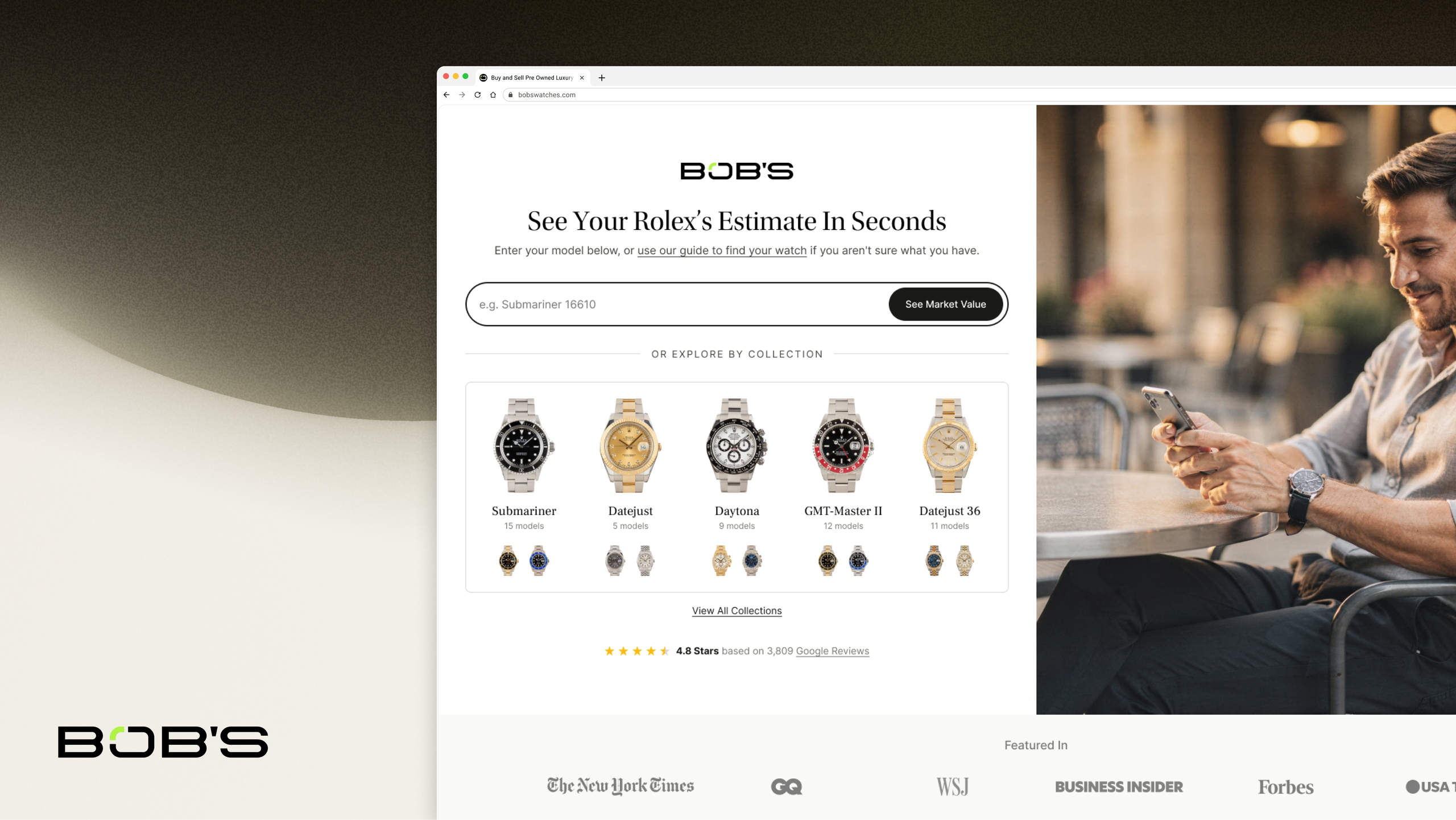
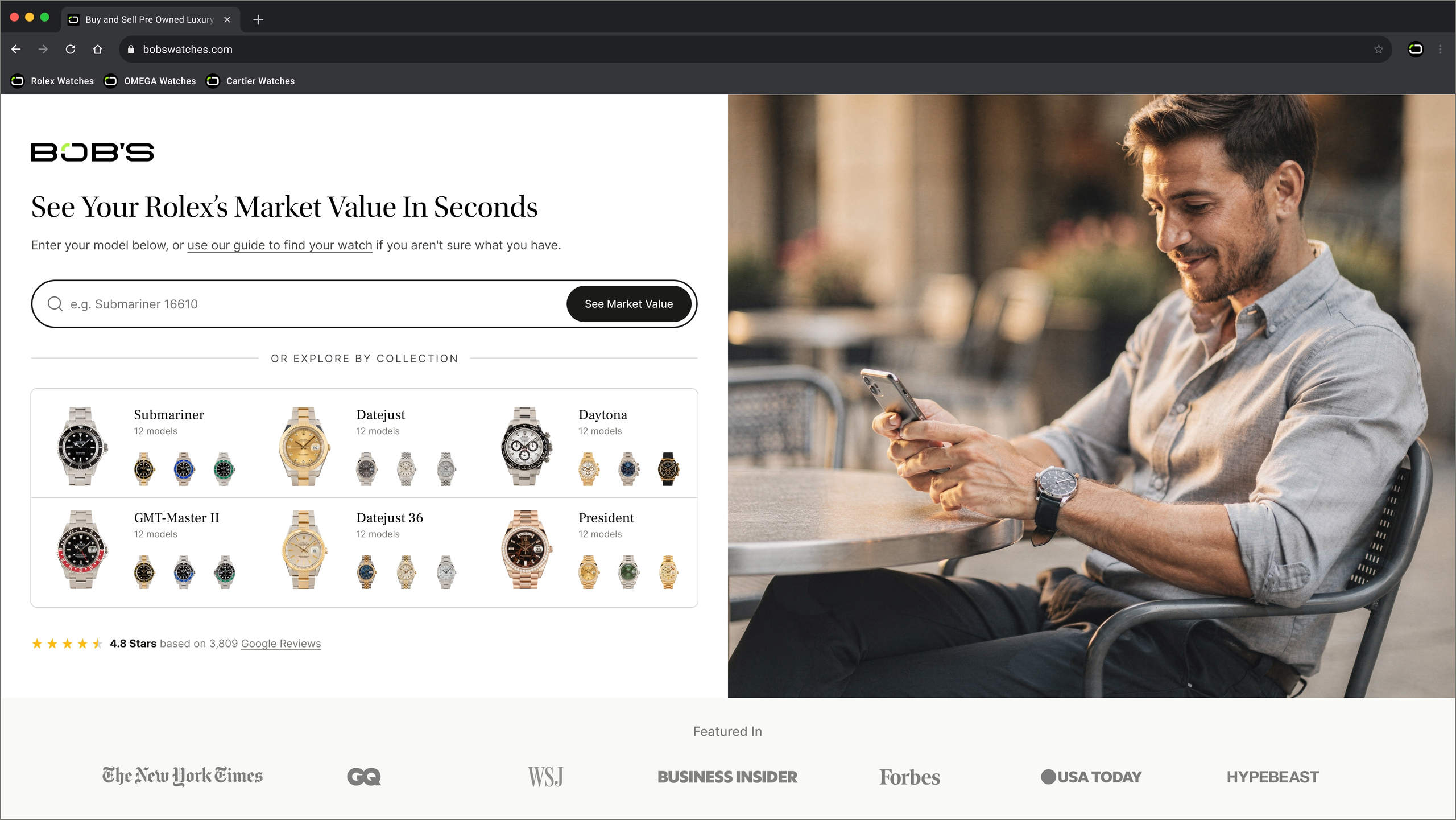
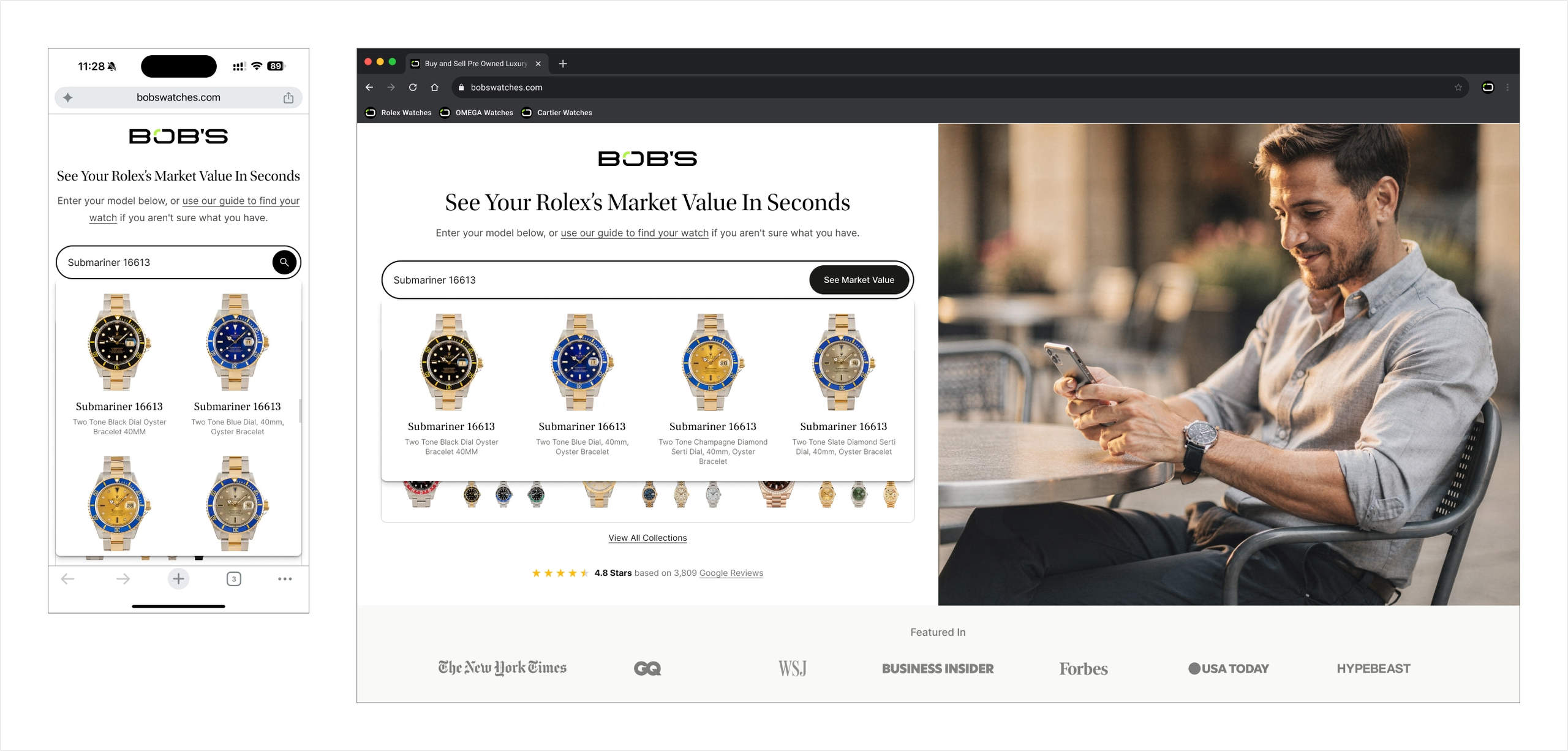
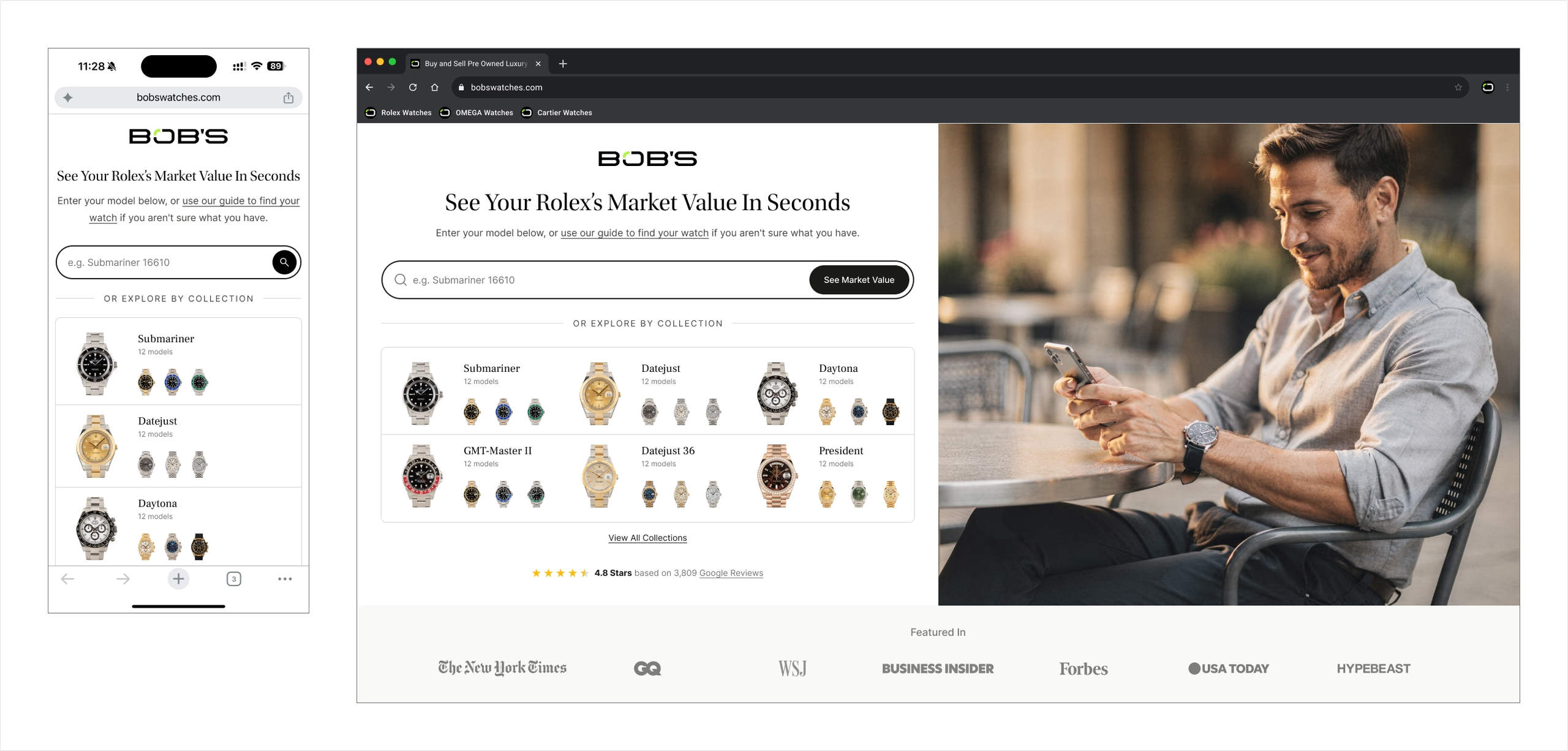
The mockups reflect a deliberate shift in hierarchy. Instead of treating the form as the hero and the pricing logic as a secondary tool, the experience now communicates a clear message: we understand what you’re here for.
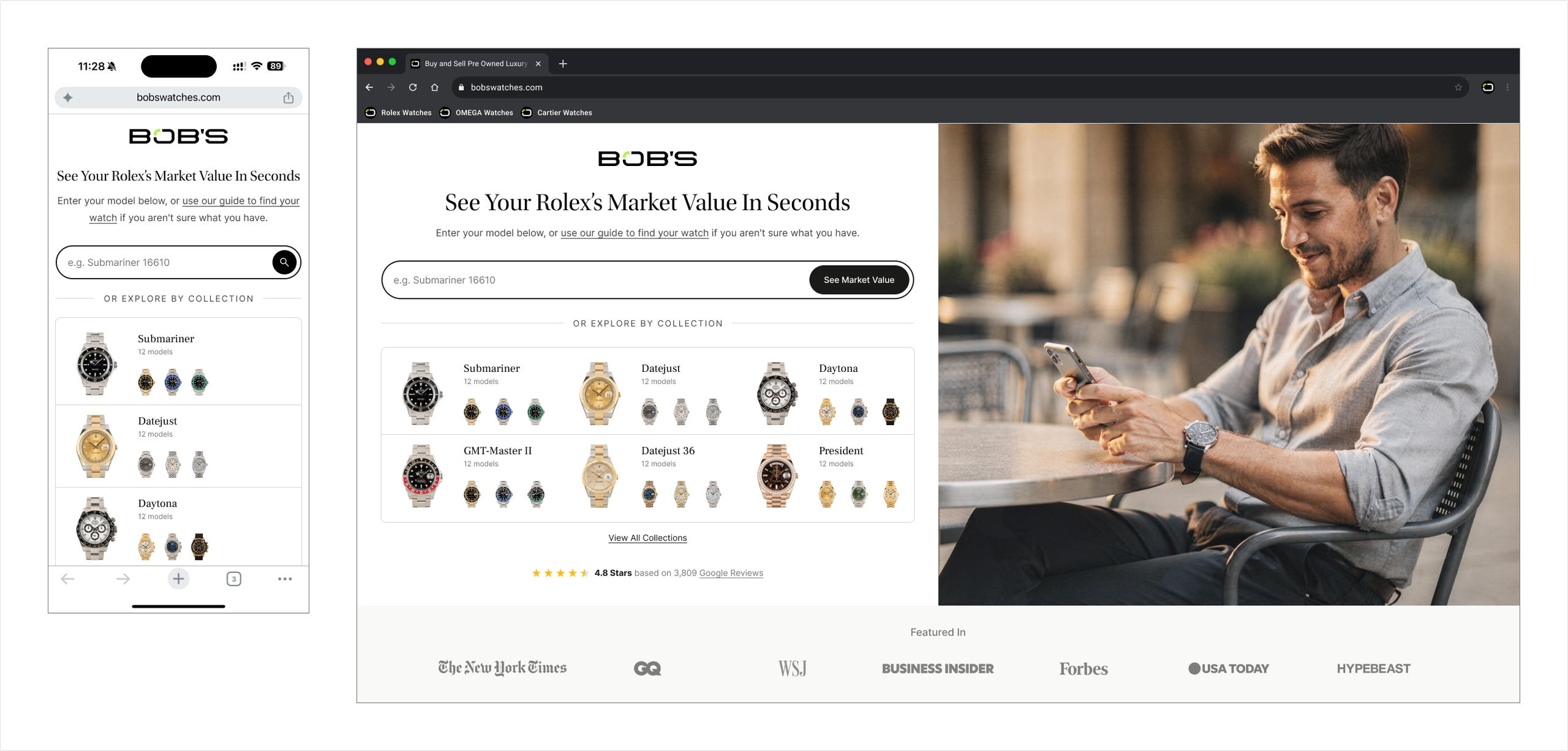
Valuation-first mock up rev 4
The model search field is given visual priority. It behaves more like a conversation starter than a data entry point. Suggestions feel immediate and relevant, reducing the sense that users are dropping information into a void. This isn’t about showing more data. It’s about showing competence faster.
Declaring Intent Without Commitment
One of the quieter but more revealing findings from the research was how often users hesitated before engaging fully with the form. Many weren’t ready to sell yet, but they weren’t just browsing either. They were somewhere in between.
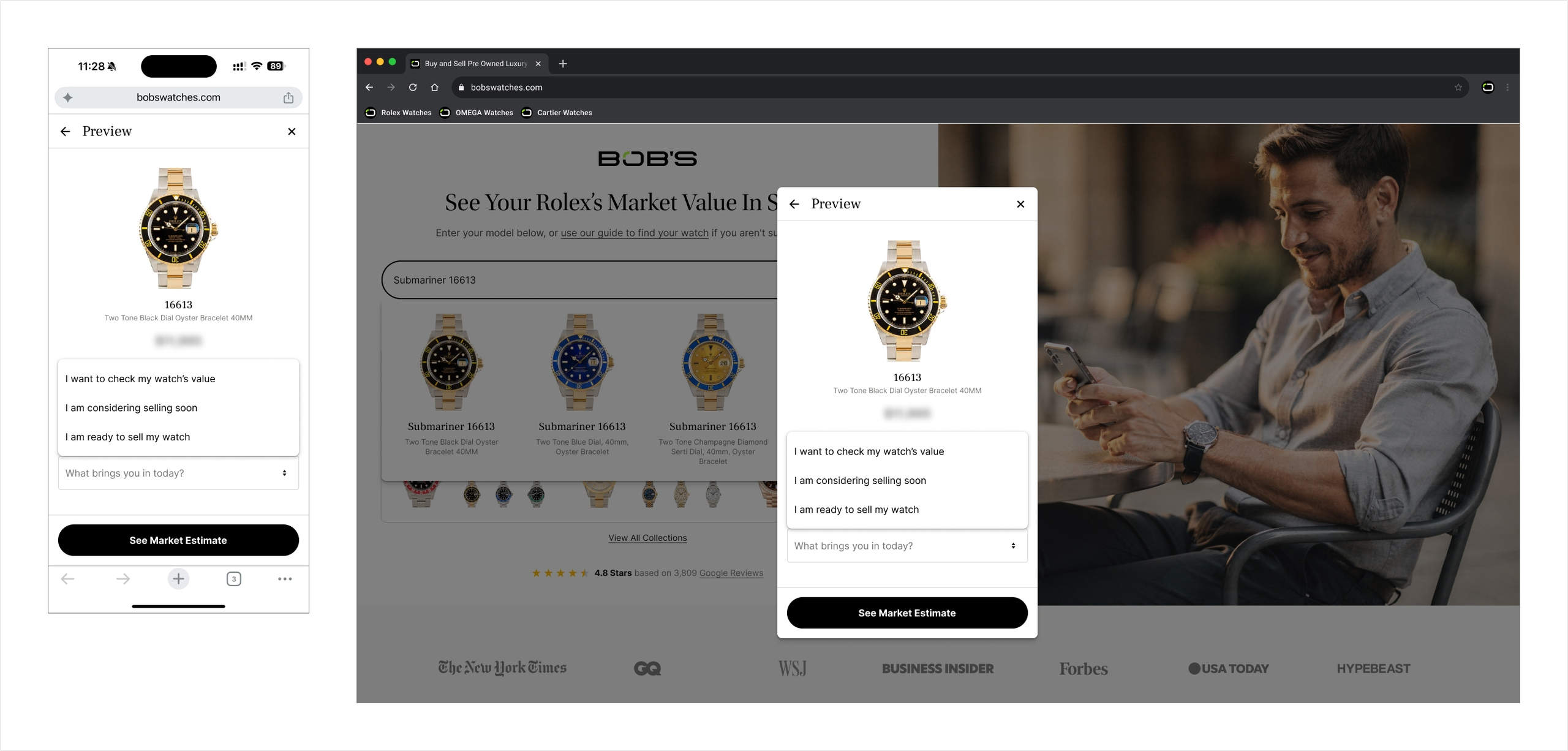
The addition of lightweight intent selection, such as “I want to check my watch’s value” versus “I’m ready to sell my watch,” isn’t meant to segment users aggressively or gate the flow. It’s meant to reduce psychological pressure.
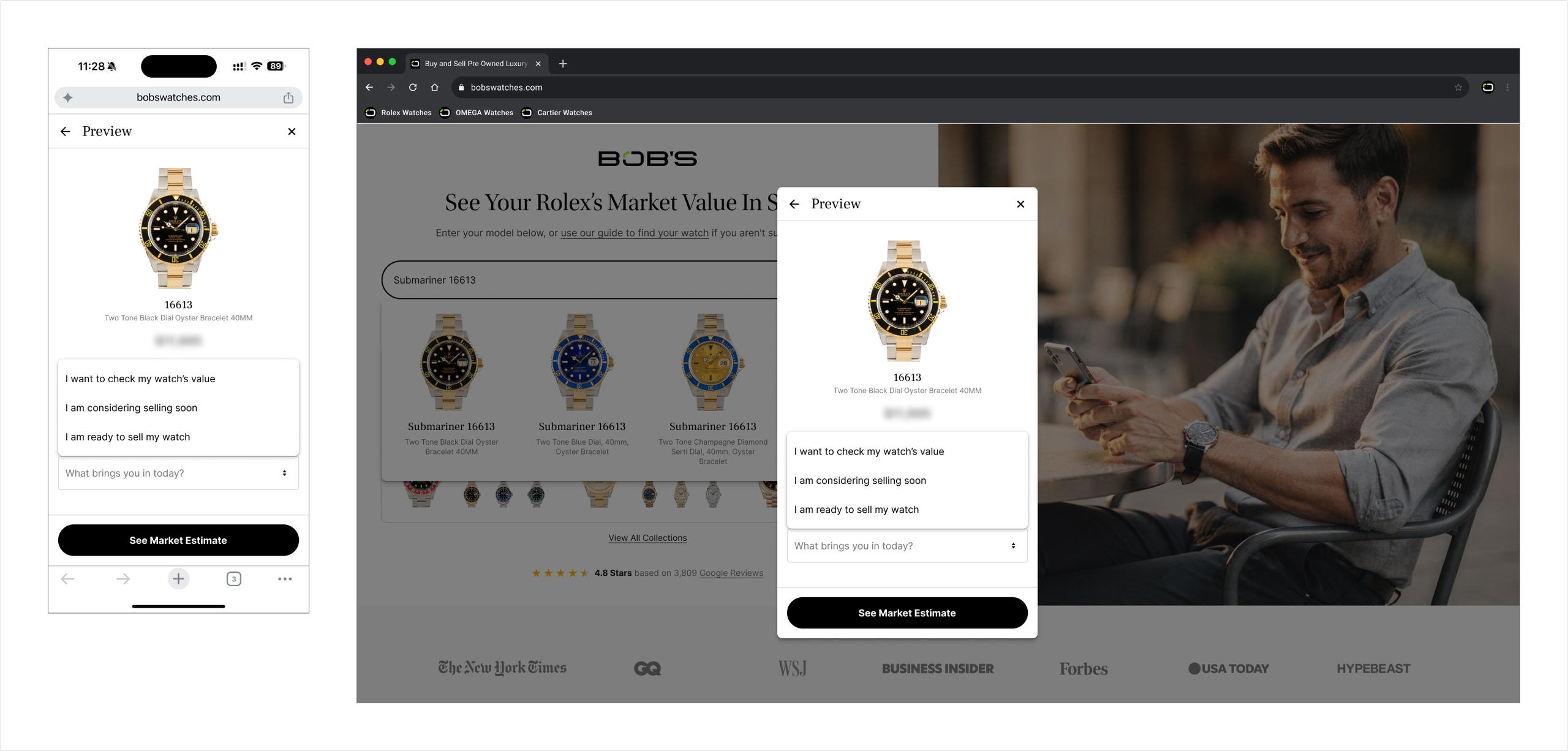
By allowing users to self-identify their mindset, the experience acknowledges uncertainty as valid. This reduces friction without adding complexity and prevents the form from feeling like a point of no return. The mockups show this as a subtle affordance, not a fork in the road. No hard branching, no penalties, just acknowledgment.
Designing Feedback Where Anxiety Lives
One of the clearest signals in the Clarity data wasn’t confusion, but hesitation caused by false requirements. Several form fields were visually marked as required, even though they could be skipped. This decision wasn’t driven by UX. It came from a mix of leadership preference and SEO assumptions and effectively became a poor experiment in the live experience.
The behavioral impact was immediate. Users re-clicked fields they had already filled out, hovered, paused, and sometimes abandoned the flow altogether. This wasn’t uncertainty about how the form worked. It was fear of making a mistake. Many sellers don’t know their exact model or reference number.
Asking for that information while signaling it as mandatory creates unnecessary pressure at the moment trust matters most. The revised designs align visual cues with reality. Required indicators now reflect true requirements, optional fields are clearly labeled, and uncertainty is treated as a valid state. In a luxury context, reducing anxiety isn’t about simplification. It’s about setting honest expectations.
Treating Mobile as a First-Class Selling Environment
The research made one thing painfully clear: mobile users weren’t “researching now, selling later.” They were selling right now. Many mobile sessions ended on the primary call to action. Scroll depth was even shallower than desktop. Decisions were faster and less forgiving.
The mobile mockups reflect a tighter, more decisive flow. Inputs are stacked logically. Distractions are minimized. The primary action is always visible without scrolling. Nothing critical requires exploration.This is not a compressed desktop experience. It’s a purpose-built mobile selling surface.
Visual Consistency as a Trust Signal
Luxury users notice when things feel “off.” In the original experience, small inconsistencies accumulated: spacing changes, alignment shifts, form density that didn’t match the perceived value of the asset being sold. Individually minor, collectively meaningful.
The revised designs bring visual calm. Spacing is intentional. Components breathe. The form feels less like a data capture mechanism and more like a conversation with a knowledgeable professional.


This isn’t aesthetic indulgence. It’s risk reduction. When users are deciding whether to ship a five-figure watch, visual polish becomes a functional requirement, not a stylistic choice.
Closing Thoughts: Designing for the Moment of Trust
Just as important as what changed in this work is what didn’t. Navigation stayed the same. Page structure stayed the same. The overall funnel logic remained intact. This was not a redesign born from ideal conditions, but an optimization grounded in reality, working within existing constraints and focusing only on the moments that carried the most risk.
The mockups show how much impact can be achieved without sweeping change. By respecting user intent, clarifying feedback, reducing uncertainty, and simplifying the form, the experience became more responsive without altering the broader system. The work focused on removing friction at the point of highest commitment, not reimagining the entire journey.
In luxury selling, conversion is not created by asking for commitment sooner. It is earned by proving competence first. The real transaction happens before the form is submitted. The form simply records the moment trust has already been established.